High-quality
automotive filter
automotive filter


Have you ever noticed that some Fuel Filters and Oil Filters look almost identical? They often share the same canister shape, similar colors, and sometimes even the exact same thread size, meaning they physically fit onto the same mounting base.
However, appearances can be deceiving. Just because it screws on, doesn't mean it works. Using a fuel filter in place of an oil filter can lead to catastrophic engine failure. The internal mechanisms of these filters are designed for completely different fluids and purposes. Here are the two critical reasons why they are not interchangeable.
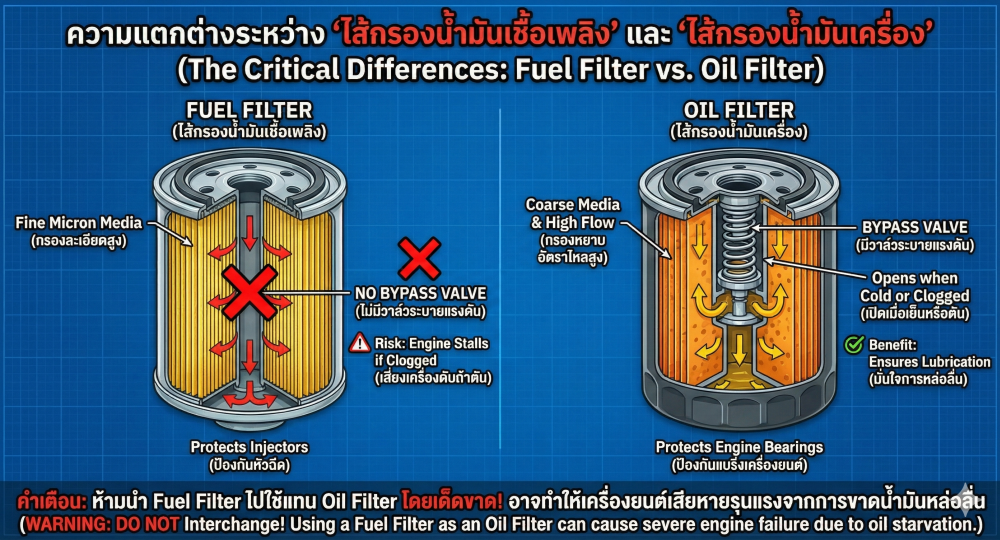
The heart of any filter is the filtration media (paper), and oil requires a different specification than fuel.
Fuel Filters: Modern fuel injection systems are extremely sensitive. Therefore, fuel filters are designed with a very fine micron rating to trap even the tiniest microscopic particles. The paper is "tighter."
Oil Filters: Motor oil is much thicker (higher viscosity) than fuel. If you use a fuel filter—which has very tight restriction—to filter thick motor oil, the oil cannot pass through fast enough.
The Result: This restriction causes a massive drop in flow rate. Your oil pump will struggle, and the engine parts will not receive adequate lubrication, leading to rapid wear.
This is the most critical technical difference.
Oil Filters "Must" Have a Bypass Valve: Engine oil thickens when cold, or the filter may become clogged over time. If the oil cannot pass through the filter media, an internal Bypass Valve (Relief Valve) opens. This allows unfiltered oil to bypass the media and flow directly to the engine bearings. The Logic: "Dirty oil is better than no oil." It prevents the engine from seizing.
Fuel Filters Typically "Do Not" Have a Bypass Valve: In a fuel system, if the filter clogs, we want the flow to stop. We do not want dirty fuel bypassing the filter and ruining the expensive fuel injectors. The Logic: "No fuel is better than dirty fuel." The engine will simply stall, but it won't be damaged.
The Danger of Swapping: If you install a Fuel Filter (which has no bypass valve) onto an oil system: When the filter eventually clogs or the oil is cold, the oil flow will be completely blocked. With no bypass valve to open, your engine will suffer from Oil Starvation. This can cause the pistons to seize or bearings to spin within seconds or minutes.
While the external metal canister may look the same, the engineering inside is worlds apart. The difference in Micron Rating and the presence of a Bypass Valve make them incompatible.
Expert Advice: Never risk your machinery or vehicle by choosing a filter based on visual similarity or thread size alone. The cost of a proper filter is minimal compared to the cost of rebuilding a ruined engine. Always verify the Part Number or consult with a specialist.